Collections
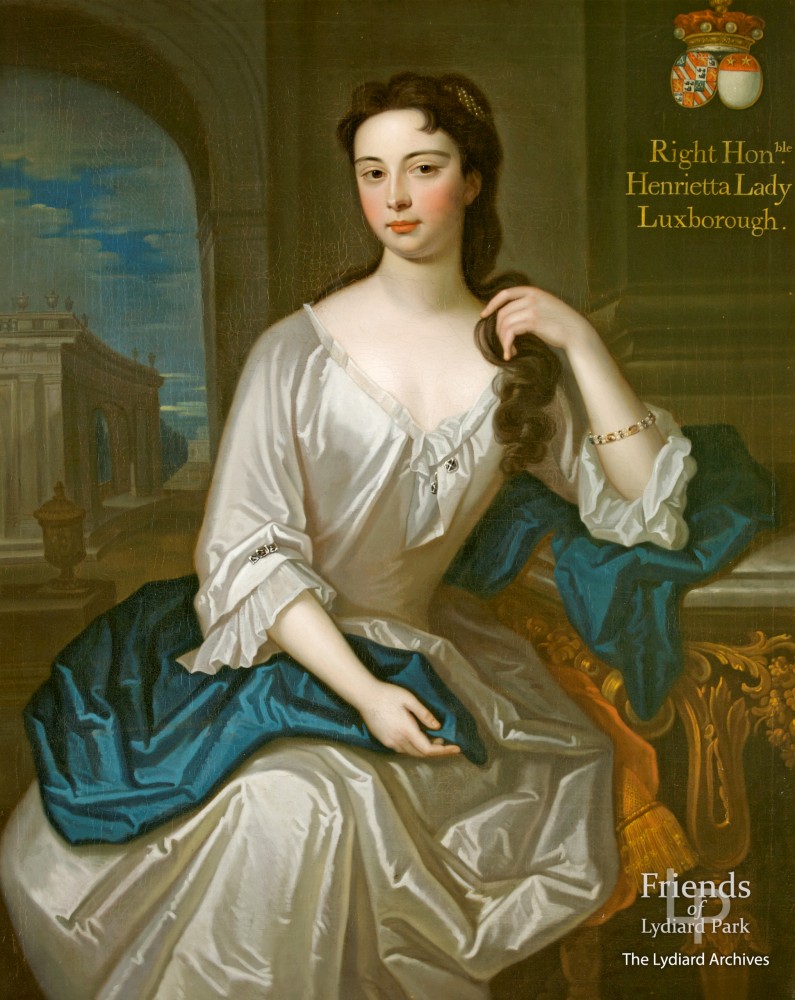
Henrietta St John (1699-1756), Lady Luxborough, attributed to Maria Verelst, c1720
Henrietta, Lady Luxborough
The St John ladies of Lydiard Park certainly had a penchant for gardening. From Johanna, famous for her herbal remedies, to Diana, artist wife of Frederick ‘Bully’ Bolingbroke, who sought solace in the walled garden, the Lydiard ladies left their mark on the estate. And for Johanna’s granddaughter Henrietta, her love of gardening would sustain her through exile and isolation.
Henrietta was born on July 15, 1699 in the midst of the squabbling St John family, the daughter Henry, 1st Viscount St. John and his second wife Angelica Pellisary. With her mass of unfashionable black hair and striking features, Henrietta was beautiful in an unconventional way. She was intelligent, amusing and gregarious with a romantic inclination, qualities that, unfairly but ultimately proved her downfall.
It was her elder half-brother Henry who introduced her to banker Robert Knight. Following a short engagement the couple were married at St George’s, Hanover Square on June 10, 1727. Robert and Henrietta set up home in Paris with Henrietta’s in laws. When not required to be in attendance upon her in laws, Henrietta would return to England, staying with her childhood friend Frances, Lady Hertford.
It was on one such visit to the Hertford’s home in Marlborough during the winter of 1735/36 that Henrietta met the handsome young poet John Dalton, tutor to the Hertford’s son Viscount Beauchamp.
There was never any hard proof as to the nature of Henrietta’s relationship with Dalton, ten years her junior. Incriminating poems and a letter Henrietta claimed to be a copy or translation of another were all that emerged as she insisted theirs had been but a light hearted, platonic flirtation. But Knight was having none of it.
Robert Knight, hardly Mr Squeaky Clean himself, was indignant, as was Henrietta’s pot calling half-brother Henry.
Robert issued his wife with two alternatives. She could either live in his house, confined to one floor, deprived of the means to keep in touch with friends and banned from seeing her children. Or she could retire to the Knight family home at Barrell’s Hall in Warwickshire on an income of £500.
Henrietta tried living in her husband’s London home before opting for the Barrell alternative. Despite the restrictions on her movements – she was forbidden to go within 20 miles of London – and the dilapidated state of Barrell’s Hall – Henrietta made the best of a bad lot, even adopting the title Lady Luxborough when her estranged husband was raised to the peerage.
Henrietta died on March 26, 1756 aged 56. She had been reunited with her daughter but never enjoyed a close relationship with her son. She is buried at St Peter’s Church, Wootton Wawen, Warwickshire.
About the Portrait
Medium - oil on canvas
Measurements - H 125 x W 100 cm
Transferred from the de Morgan Foundation, 2005