Collections
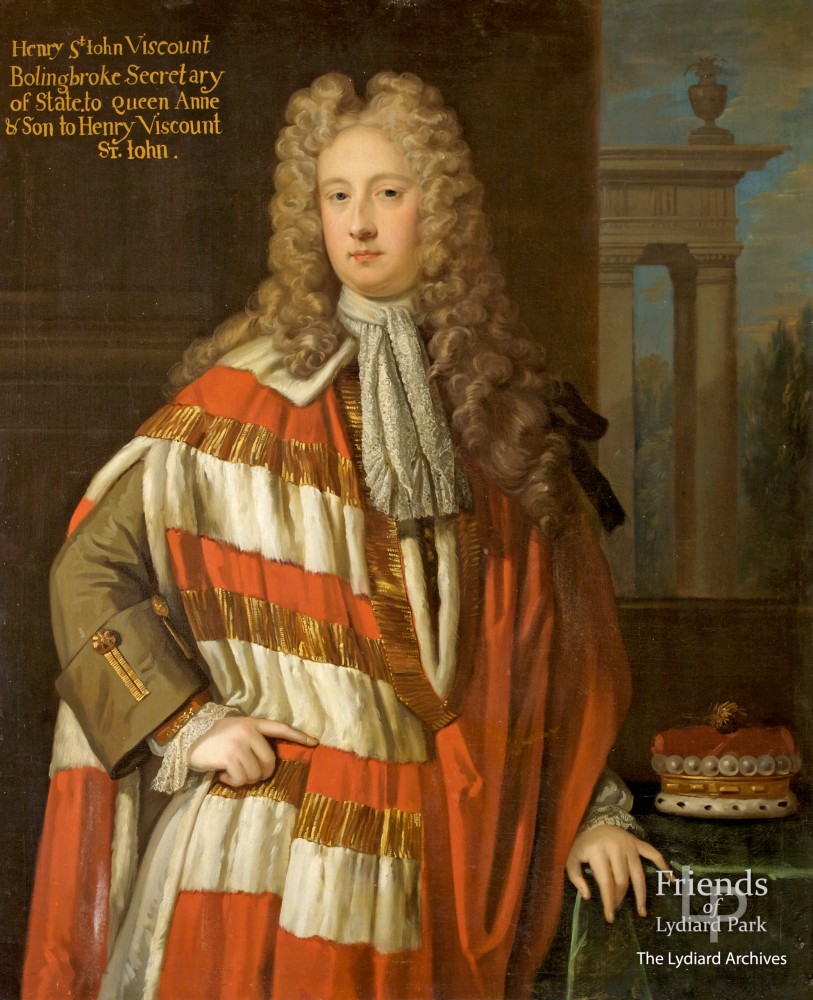
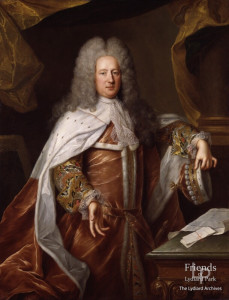
Henry St John (1678-1751) 1st Viscount Bolingbroke, Secretary of State to Queen Anne
Henry, 1st Viscount Bolingbroke
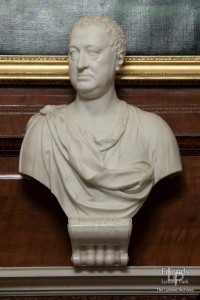
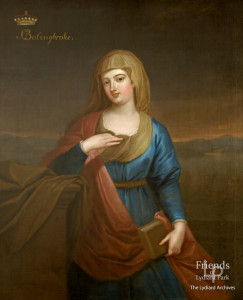
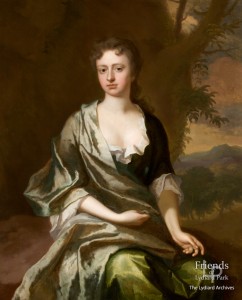
During the 18th century Henry St. John, Viscount Bolingbroke was the poster boy for the St. John family. Lydiard House has three portraits and a Rysbrack bust and portraits and engravings of his likeness continue to come on the market even today.
A prolific writer and gifted orator and politician, Henry was appointed Secretary at War during Queen Anne’s reign and was credited with securing the Treaty of Utrecht in 1712, which ended England’s military involvement in the War of the Spanish Succession. He was raised to the peerage as Viscount Bolingbroke the same year in recognition of his contribution.
But then it all went horribly wrong.
Henry was born in 1678 at Lydiard House, the third child of Henry St. John and his wife Mary Rich and the only one to survive. Sadly, Mary died shortly after his birth and was buried in the St. John family vault beneath St. Mary’s Church. With his father considered a poor role model to raise the child, Henry was whisked off to live with his grandparents Sir Walter and Lady Johanna St. John at their home in Battersea.
It is often stated that he was educated at Eton and then Christ Church, Oxford but this has been challenged as his name does not appear on the register of these institutions.
In 1698/99 he embarked upon a Grand Tour of Europe, a rite of passage for all wealthy young gentleman. Free of his controlling Puritan grandparents Henry discovered not only the splendours of antiquity but the delights of wine, women and partying in general.
He entered parliament in 1701 representing Wootton Bassett as an early member of the new political party the Tories. He socialised with writers numbering Jonathan Swift, Alexander Pope and Voltaire as friends and he partied hard.
In 1700 he married wealthy heiress Frances Winchcombe but his flirtation with domesticity didn’t last long and he was soon back to his old ways. His intellect, influence and inflated ego created an aura of infallibility.
But with the death of Queen Anne in 1714 his star came crashing down. Henry chose not to support Queen Anne’s successor the Electorate of Hanover, George I but to nail his colours to the mast of the Jacobite Pretender, James Francis Edward Stuart. He fled into exile in France where he was subsequently found guilty of treason having his title removed and his property seized.
But it wasn’t all doom and gloom. While his deserted wife tried to plead for his clemency and eventually wasted away and died, some say, of a broken heart, Henry revisited a couple of former mistresses before settling down with the widowed Marie Claire de Marcilly.
In 1723 he was pardoned and able to return to England. With Frances now out of the picture, he married Marie and the couple moved into the St. John family’s Battersea home. Henry had previously handed over his interest in Lydiard House to his younger half-brother John.
Henry St. John, Viscount Bolingbroke died at his Battersea home on December 12, 1751 aged 73 years. He is buried in a vault beneath in St. Mary’s Church, Battersea.
About the Portrait
Medium - oil on canvas
Measurements - H 124 x W 100.5 cm
Purchased in 1965 from Vernon St.John, 6th Viscount Bolingbroke
Son to Henry St John, 1st Viscount St John ( 1652-1742)